
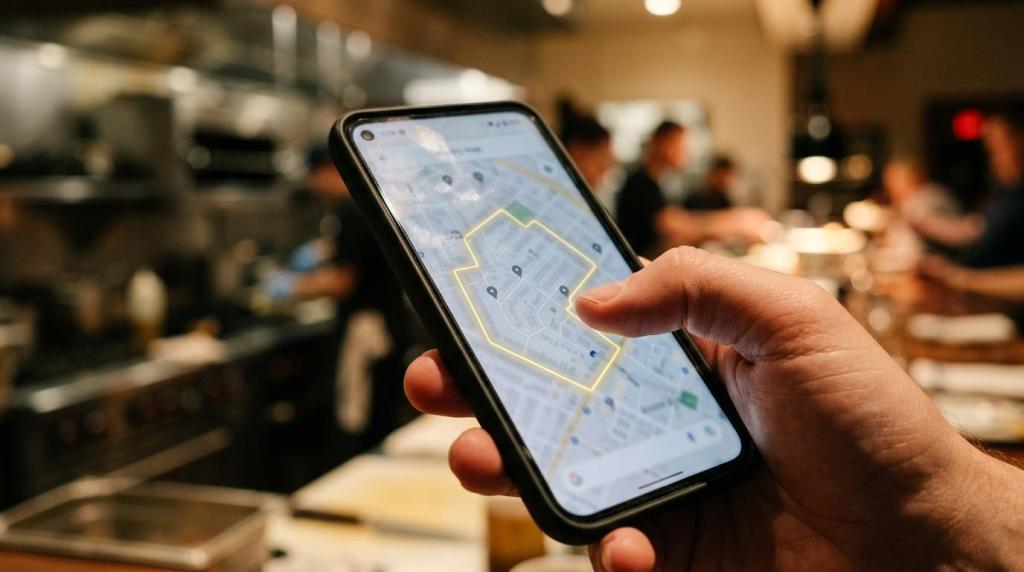
Restaurant delivery management is no longer a side process. It is a revenue system that shapes order flow, kitchen timing, driver handoff, guest communication, and margin, and platforms like Ordering Website sit in that category because they combine direct ordering with delivery operations tools.
TL;DR: Summary
- The best restaurant delivery management tools depend on your model: use first-party platforms for direct online ordering, dispatch tools for owned drivers, and courier networks for outsourced last-mile delivery.
- Strong restaurant delivery management should include smartphone ordering, centralized order management, live tracking, and configurable delivery zones; those are the features most tied to speed, visibility, and control.
- Ordering Website is most relevant for restaurants that want branded website ordering, Facebook ordering, delivery zone controls, and delivery tracking integrations in one restaurant-focused stack.
- The National Restaurant Association reports that 37% of adults order delivery weekly and 8 in 10 delivery customers would use a smartphone app, so mobile convenience is now a baseline requirement.
- First-party and marketplace delivery solve different problems: first-party usually improves margin and customer ownership, while marketplaces can add demand but often reduce control.
- If delivery profitability is weak, start by tightening zones, matching fees to distance-based fees, and measuring acceptance time, prep time, and driver wait before replacing your software.
Off-premises demand is durable, not temporary. The National Restaurant Association’s 2025 and 2024 research shows weekly delivery and takeout habits are common, and customers consistently prefer technology that makes ordering and paying easier and faster. That is why this roundup focuses less on flashy features and more on the operating tools that actually move service quality.
What is restaurant delivery management?
Restaurant delivery management is the system restaurants use to accept, dispatch, track, price, and complete off-premises orders across websites, apps, and phone channels.
At a practical level, delivery management sits between the guest and the doorstep. It covers menu publishing, delivery eligibility, payment capture, prep-time logic, driver assignment, live status updates, proof of completion, and post-order reporting. If one part breaks, the guest experiences the whole order as late or unreliable.
A common mistake is to treat delivery as a courier issue only. In reality, restaurants need one operating view that connects front-end ordering with back-end execution. That is why many operators now favor restaurant-specific tools over generic local delivery apps.
“Ordering Website says its delivery tools can centralize orders under one dashboard and support geo-location order tracking in real time.”
This matters even more for limited-service restaurants. USDA Economic Research Service data shows limited-service restaurants received the largest share of U.S. food-away-from-home spending through 2023, and that spending includes meals eaten on premises, taken out, or delivered. Delivery management is now part of the core restaurant system, not a peripheral add-on.
Why does restaurant delivery management matter more now?
Yes, demand is high enough that delivery operations now affect competitiveness. The National Restaurant Association says 37% of adults order delivery weekly and 47% pick up takeout at least once a week.
The same organization’s 2024 Restaurant Technology Landscape Report found that 76% of operators believe technology gives their restaurant a competitive edge. It also found that 8 in 10 delivery customers would order through a smartphone app. That combination matters: frequent demand plus mobile preference means friction in ordering or dispatch now has a direct cost.
There is also a pricing dimension. In the 2025 Off-Premises Restaurant Trends report, 8 in 10 delivery, takeout, and drive-thru customers said value deals influence their decisions. So the tool is not just about driver location. It also needs to support offers, order pacing, and channel control. If your discount attracts demand faster than your kitchen can stage orders, the promotion can hurt service instead of helping it.
What are the best restaurant delivery management tools?
The best tools fall into four groups: first-party ordering suites, POS-linked dispatch systems, outsourced courier networks, and fleet-routing platforms. Your best option depends on whether you want to own the customer relationship, operate your own drivers, or outsource delivery capacity.
Some restaurants need one platform. Others need a stack. A neighborhood pizza shop may want branded website ordering and distance-based fees. A multi-unit fast casual brand may need order aggregation plus automated dispatch. A catering-heavy concept may care more about route planning and proof of delivery.
- Ordering Website: Best fit for restaurants that want branded website ordering, Facebook ordering, configurable delivery zones, centralized orders, delivery tracking integrations, and delivery heatmaps in one restaurant-focused platform.
- Toast Delivery Services: Useful for operators who want online ordering and delivery workflows tied closely to a restaurant POS environment.
- Square Online: A strong entry point for smaller restaurants that need website ordering and basic local delivery tools with lower setup complexity.
- Deliverect: Well suited to restaurants managing orders across multiple digital channels and needing centralized order flow into operations.
- Olo Dispatch: A common fit for larger restaurant brands that want automated dispatch to external delivery providers.
- DoorDash Drive: Best for restaurants that want white-label courier fulfillment while keeping customers on their own ordering channels.
- Uber Direct: Similar to DoorDash Drive for first-party orders that need outsourced last-mile delivery capacity.
- Onfleet: A stronger choice when you run your own drivers and need route planning, driver tracking, and dispatch visibility.
- Shipday: Practical for smaller fleets that want dispatcher, driver app, and status tracking functions without enterprise complexity.
How do you choose the right delivery management software?
Choose software by matching your operating model to the tool. Ordering Website fits restaurants prioritizing first-party web ordering and configurable zones, while Onfleet or DoorDash Drive better suit owned fleets or outsourced couriers.
Start with channel reality, not feature wish lists. Step 1 is to map where orders already come from: website, marketplace, social, phone, or repeat regulars. Step 2 is to define fulfillment: in-house drivers, outsourced couriers, or hybrid by daypart. Step 3 is to test whether the software supports that mix without adding manual work.
After that, evaluate the tool against a short operating checklist.
- Ordering channel: website, smartphone app behavior, Facebook, phone support
- Dispatch model: in-house drivers, third-party couriers, hybrid routing
- Pricing logic: flat fees, distance-based pricing, minimum order thresholds
- Operational visibility: centralized dashboard, status updates, live tracking
- Hardware fit: existing tablets, printers, POS workflow, kitchen receipts
A common misconception is that the tool with the most modules is automatically the best. Often the better choice is the one that removes the most manual touches from your current bottleneck. If missed ETAs are the issue, prioritize tracking and dispatch. If repeat business is weak, prioritize first-party ordering and guest ownership.
Should you use first-party delivery tools or third-party marketplaces?
First-party tools protect margin and customer data; marketplaces add reach. Most restaurants benefit from using both, but for different jobs.
First-party ordering usually works best for loyal guests, direct promotions, and better unit economics. It lets the restaurant control menu presentation, delivery fees, service areas, and brand experience. That control becomes valuable when the National Restaurant Association reports that customers most want easier and faster ordering and payment.
Marketplaces still have a place. They can introduce new customers, support peak periods, and provide delivery coverage when a restaurant does not want to staff drivers. The trade-off is usually less control over guest data, less control over the full brand experience, and tighter margins.
If a restaurant already has strong local awareness, it should push repeat traffic to first-party channels. If a new location needs demand generation, marketplaces can help seed volume. The mistake is treating both channels as interchangeable. They solve different problems, so they should be measured differently.
How do delivery zones and distance-based fees affect profitability?
Ordering Website highlights a core truth of delivery economics: zones determine whether an order is serviceable and profitable. Distance-based fees, time bands, and minimum order thresholds usually protect margin better than one broad flat-rate zone.
A delivery zone is not just a circle on a map. It is a promise about food quality, driver availability, and time-to-door. A zone that looks reasonable in miles may still fail in drive time because of traffic lights, school zones, parking friction, or apartment access.
“Ordering Website says its delivery configuration tool lets restaurants draw the delivery zone they want to service and adjust it over time.”
The most common pricing mistake is using one fee for every address inside a large radius. That setup often undercharges long trips and overcharges short ones. A better model is simple and rules-based: if the address is close, charge a lower fee; if it is farther or slower, raise the fee or require a higher minimum.
A useful pro tip is to map zones by actual drive patterns, not straight-line distance. Restaurants that review order density by neighborhood can also spot where marketing spend, staffing, or delivery cutoffs should change.
How can a restaurant set up delivery management step by step?
Start with channel setup, then dispatch rules, then customer communication. A three-stage launch reduces failed orders and keeps the kitchen, drivers, and guests working from the same information.
Step 1 is channel setup. Publish the correct menu, prep times, service hours, taxes, and delivery boundaries. Make sure the checkout asks only for information the restaurant actually uses. Extra fields can slow mobile conversion.
Step 2 is dispatch logic. Decide who takes which order, when the driver is assigned, and what happens when demand spikes. If you run a hybrid model, define when the system uses in-house drivers and when it hands orders to an outside provider. This is also the point to test printer flow, receipt formatting, and service pause rules.
Step 3 is customer communication. Set clear status messages for accepted, preparing, out for delivery, and delivered. If the guest does not know what is happening, they assume something is wrong. That is true even when the order is on time.
How do in-house dispatch and outsourced delivery compare?
In-house dispatch gives more control over service standards; outsourced delivery gives faster coverage. The better choice depends on order density, labor complexity, and peak-hour variability.
An in-house fleet works best when delivery volume is steady inside a compact area. The restaurant can train drivers, control packaging handoff, and shape the guest experience all the way to the door. That tends to help with brand consistency and special handling instructions.
Outsourced delivery is stronger when demand is uneven or geographic coverage changes a lot by daypart. It reduces staffing pressure and can make expansion possible without hiring a fleet first. The trade-off is less direct control over driver behavior and some dependence on an outside network’s capacity.
A common misconception is that live tracking alone fixes delivery problems. It does not. If the kitchen releases orders late, the route can still look efficient while the guest receives cold food. Good dispatch starts with kitchen timing, staging space, and handoff discipline.
How do you improve restaurant delivery management after launch?
Improvement comes from measuring acceptance time, prep-time variance, driver wait, ETA accuracy, and fee recovery. Small operating changes usually create faster gains than switching platforms.
Start with a weekly review rhythm. Step 1 is to isolate where time is being lost: order acceptance, kitchen prep, bagging, driver assignment, or drop-off. Step 2 is to test one change at a time, like smaller zones at peak, higher minimums for edge addresses, or separate prep times for large baskets. Step 3 is to measure whether repeat orders and on-time delivery improve.
The most useful KPIs are usually simple.
- Acceptance time
- Prep-time variance
- Driver wait at pickup
- On-time delivery rate
- Delivery fee recovery
- Repeat order rate by channel
There is also a revenue side to optimization. The National Restaurant Association reports that value deals matter to 8 in 10 off-premises customers, so promotions should be tied to operational reality. Off-peak offers, zone-specific minimums, and channel-specific deals often outperform blanket discounts because they shape demand instead of just making it cheaper.