
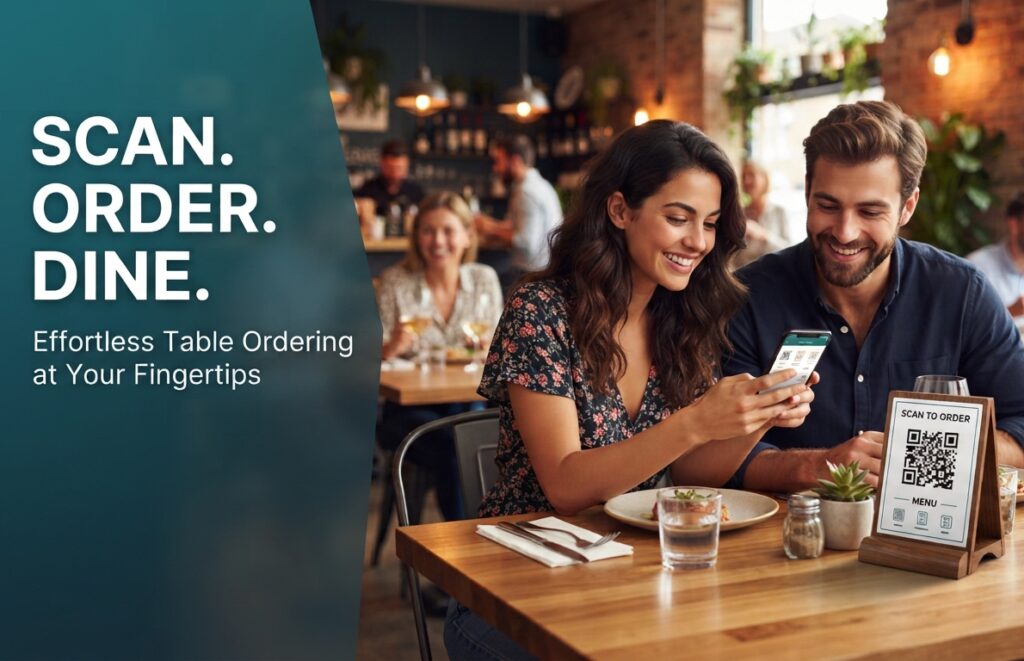
QR code dining
is a digital hospitality system that allows restaurant guests to manage their entire dining experience from their own smartphones using a quick response (QR) code placed at their table.
Instead of waiting for a physical menu, a server to take an order, or a printed bill at the end of the meal, guests use their phone’s camera to scan the code and open a browser-based application tailored specifically to their exact table or seat number.
Core Features of QR Code Dining
- Interactive Digital Menus: Guests scan the code to view live, media-rich menus complete with high-resolution food photos, detailed ingredient lists, and real-time tags for dietary restrictions or allergens.
- Instant Table Ordering: Orders go directly from the guest’s smartphone to the restaurant’s kitchen or Point of Sale (POS) system. Guests can easily customize items, add modifiers, or leave specific preparation notes without needing a server to write them down.
- Seamless Mobile Checkout: Payments can be split and processed right at the table using mobile wallets (like Apple Pay or Google Pay) or credit cards, allowing guests to leave whenever they are ready.
- Integrated Loyalty Programs: Modern systems allow guests to automatically track digital stamp cards, view accrued points, and instantly apply earned rewards to their subtotal during checkout.
Why Restaurants and Guests Use It
- Faster Table Turnaround: It eliminates dead time spent waiting for a server to bring menus, take orders, or process credit cards, which helps restaurants serve more guests per shift.
- Higher Ticket Sizes: Digital menus naturally drive higher sales through automated smart recommendations, upselling prompts (e.g., “Add extra cheese for $1.50”), and effortless reordering of rounds of drinks or desserts.
- Labor Efficiency: It relieves waitstaff from purely administrative tasks, allowing a smaller front-of-house team to focus entirely on food running, hospitality, and guest satisfaction.
- Instant Menu Control: Managers can instantly update prices or flag items as sold-out (86’d) across the system, entirely eliminating the cost and waste of reprinting paper menus.